
Why Great Playgrounds Are Designed for More Than One Age Group
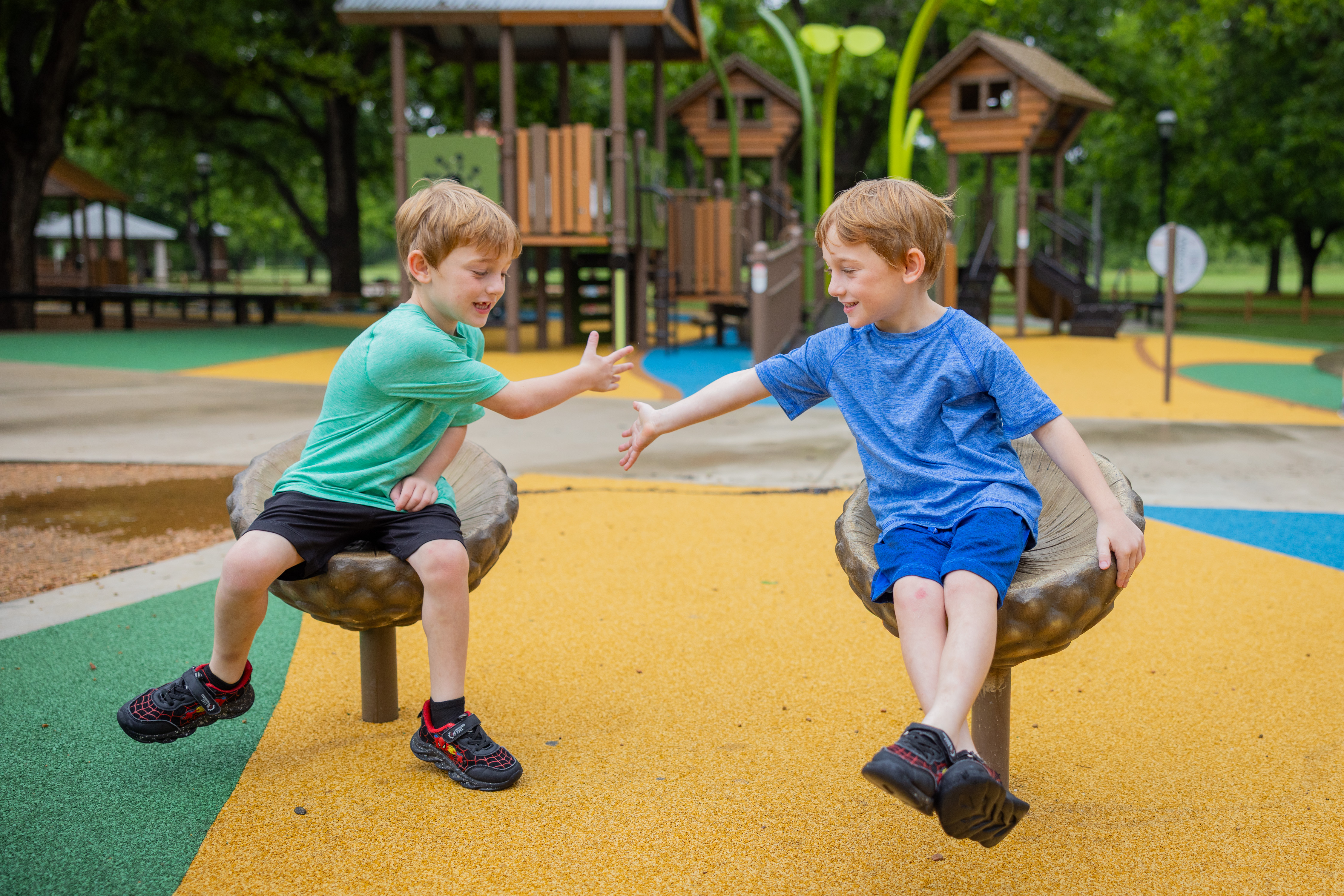
Walk through any busy community park on a Saturday morning, and you'll notice something almost immediately: toddlers cautiously exploring alongside older children racing across climbers, families with siblings of different ages moving between play areas, and caregivers trying to keep everyone engaged at once.
While it may seem practical to install one playground for everyone, children don't all play the same way. Their physical abilities, social skills, confidence levels, and cognitive development change dramatically as they grow. That's why thoughtfully designed playgrounds typically include separate play opportunities for children ages 2 - 5 and ages 5 - 12. Creating spaces that serve both age groups isn't simply about offering more equipment, it ensures every child experiences the right balance of challenge, safety and developmental growth.
Every Stage of Childhood Has Different Needs
Play is one of the most important ways children learn, but what meaningful play looks like changes significantly between preschool and elementary school.
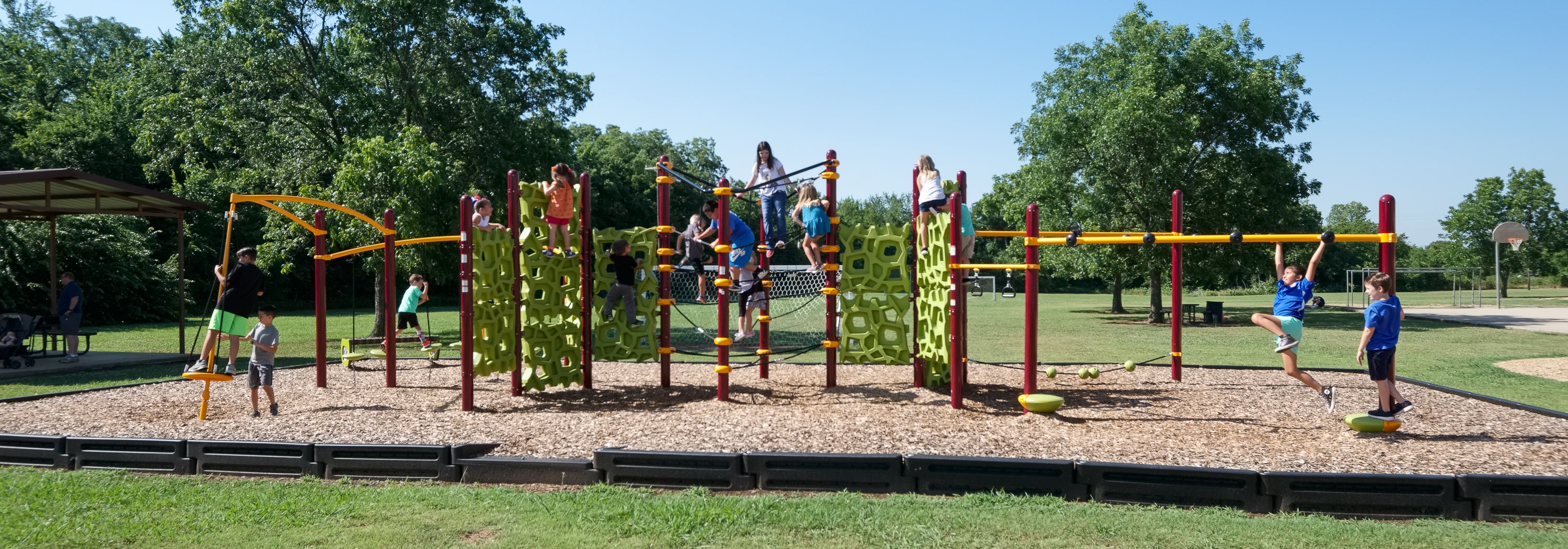
Young children are just beginning to build confidence in movement, coordination and social interaction. School-age children, meanwhile, crave adventure, independence and increasingly complex challenges. Providing equipment specifically designed for each developmental stage allows children to explore safely while continuing to build new skills as they grow. Playground standards established by organizations including ASTM International and the U.S. Consumer Product Safety Commission recognize these differences by defining separate age categories for playground design.
Ages 2-5: Building the Foundation
For preschoolers, nearly every playground experience is a learning opportunity.
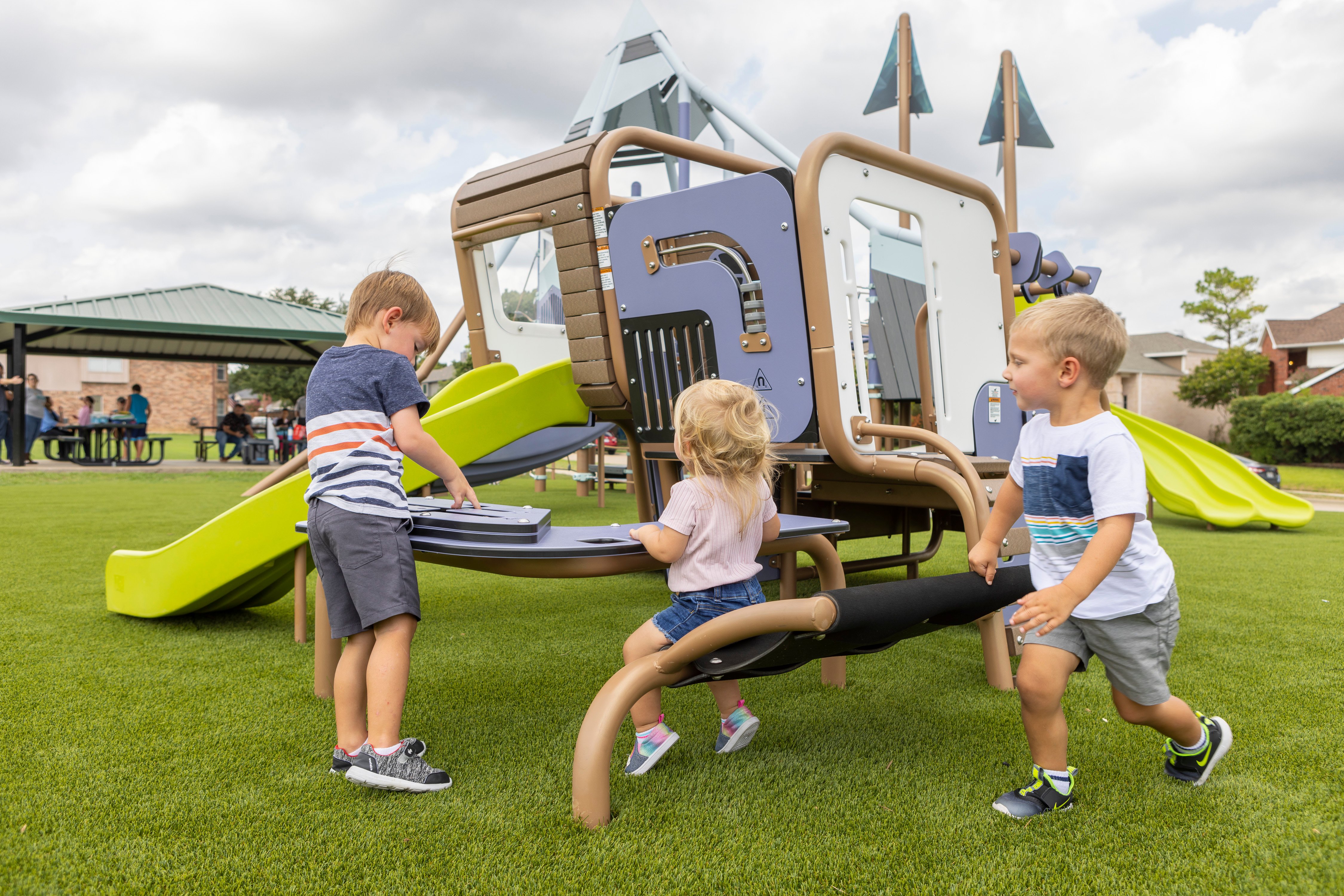
At this stage, children are developing balance, coordination, language, imagination and social confidence. They benefit from play environments that are appropriately scaled to their size and abilities while introducing just enough challenge to encourage exploration.
Features commonly found in playgrounds designed for ages 2-5 include:
- Lower platforms and shorter slides
- Gentle climbing experiences
- Interactive sensory and learning panels
- Imaginative play spaces
- Crawl tunnels and bridges
- Age-appropriate swings and spring riders
These elements help children strengthen gross motor skills while introducing fine motor development, problem solving, communication and cooperative play. Activities that seem simple - climbing a small stairway, navigating a bridge or pretending to cook in a playhouse - are actually helping develop body awareness, confidence and early cognitive skills.
Perhaps most importantly, preschool playgrounds create an environment where children experience success. Equipment designed specifically for their size allows them to master new challenges independently, building confidence that encourages lifelong active play.
Ages 5-12: Encouraging Confidence Through Challenge
As children grow, their desire for adventure grows with them.
Elementary-aged children seek opportunities to test themselves physically and socially. They climb higher, move faster, solve more complex problems, and invent imaginative games with friends.
Playgrounds for ages 5-12 typically include:
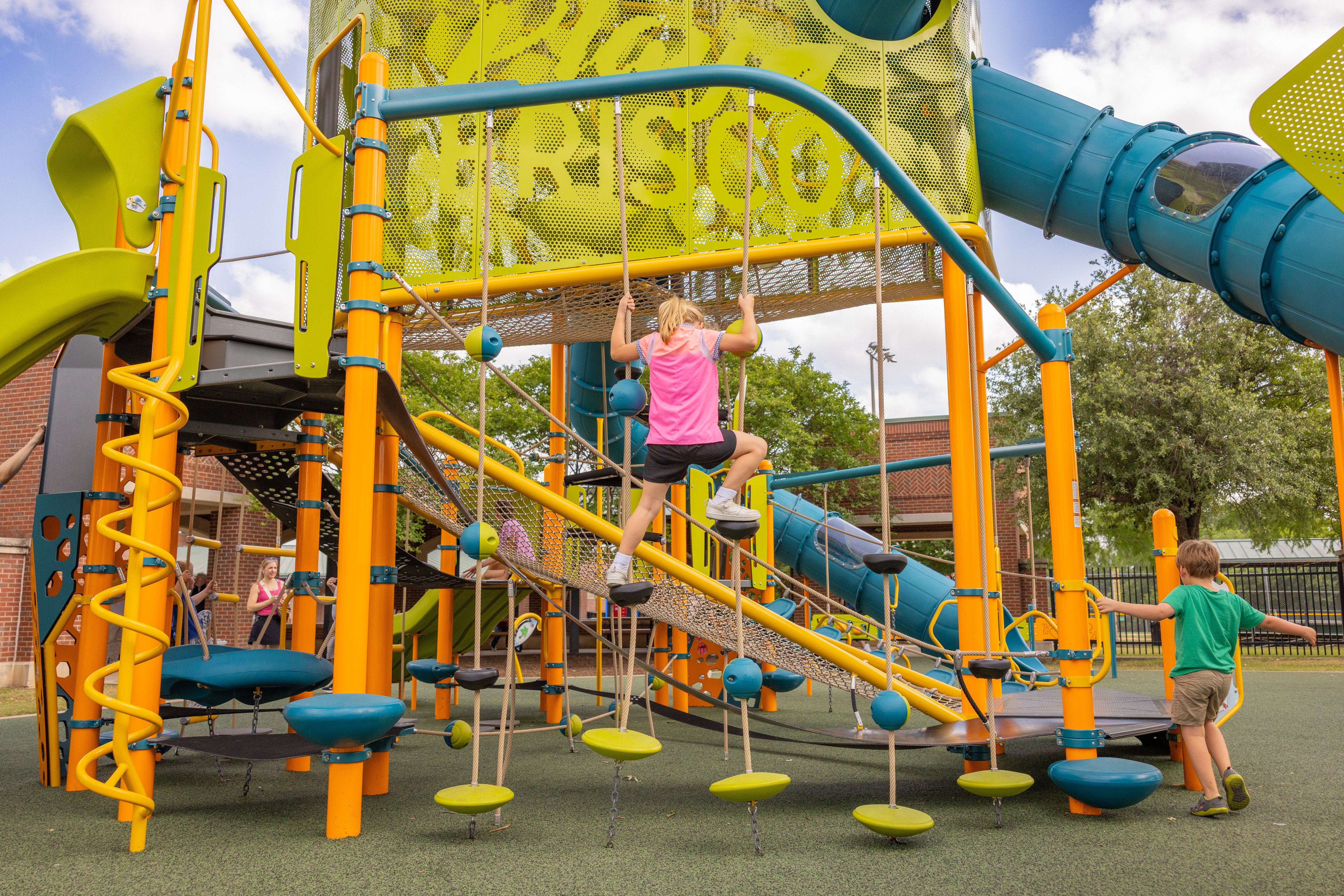
- Taller play structures
- Challenging climbing systems
- Dynamic net play
- Monkey bars and overhead events
- Spinners and balance activities
- Taller slides
- Zip lines and other destination play experiences
These more advanced activities strengthen muscles, improve endurance, refine coordination and encourage strategic thinking. Children learn persistence as they work through difficult climbing routes, develop resilience by trying again after setbacks, and build confidence by accomplishing goals that once seemed impossible.
At the same time, larger play structures encourage collaboration. Whether children are creating imaginary worlds, inventing games or helping friends navigate new obstacles, these shared experiences build communication, leadership and social-emotional skills.
Why Communities Benefit from Serving Both Age Groups
Designing for multiple age groups isn't just good for children - it creates better parks for entire communities.
Many families have children several years apart in age. A parent visiting with a three-year-old and an eight-year-old shouldn't have to choose which child gets an engaging play experience. When parks include spaces designed for both developmental stages, siblings can play in age-appropriate environments while caregivers remain in one location.
Schools, churches and neighborhood parks benefit in similar ways. Multi-age playgrounds accommodate larger groups, provide options for children with varying developmental abilities and extend the usefulness of the park as children grow.
Instead of "outgrowing" a playground after a few years, children naturally progress from one play experience to the next.
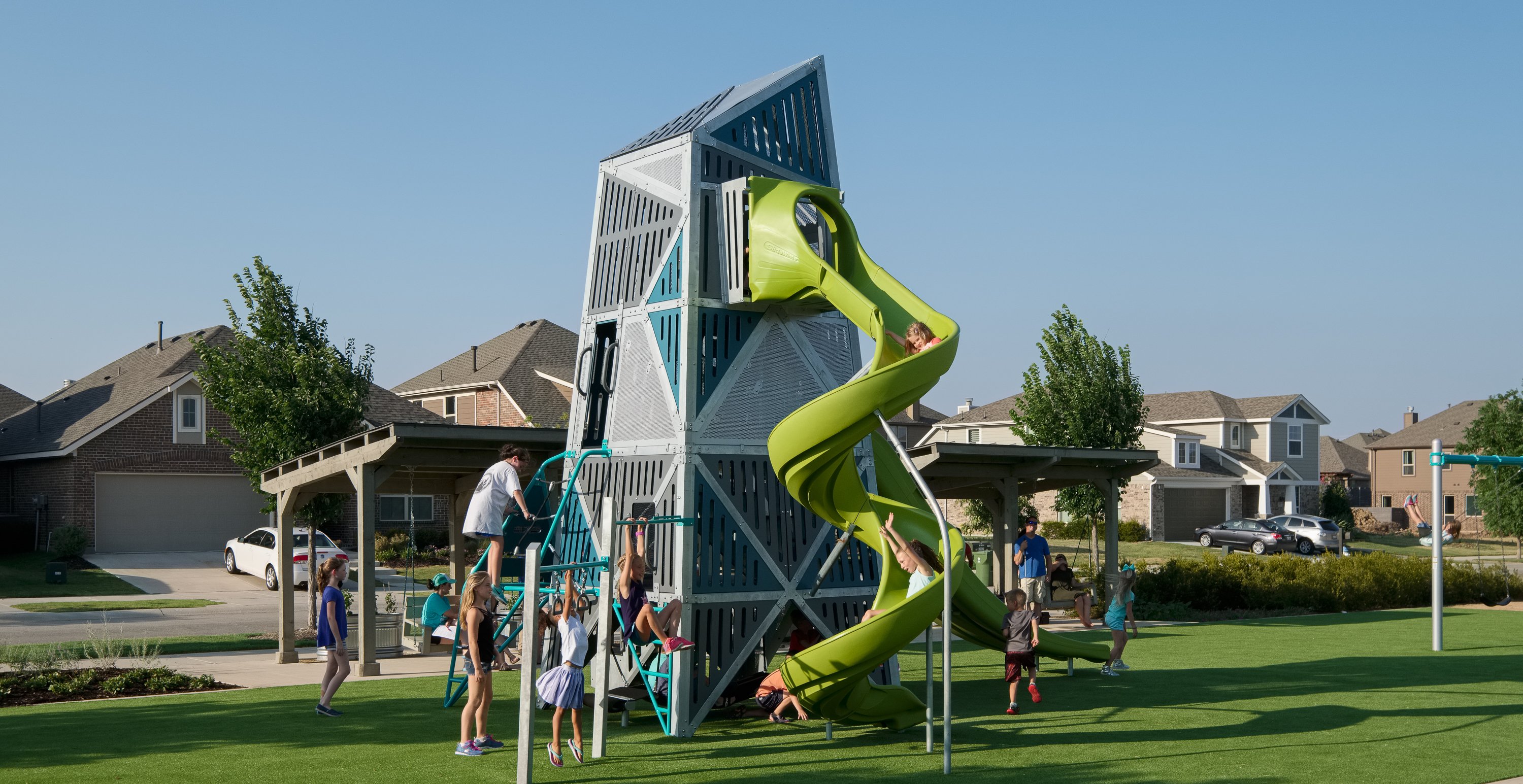
Safe Doesn't Mean Easy
One common misconception is that safer playgrounds should eliminate challenge.
In reality, children need opportunities to take age-appropriate risks. Climbing higher, balancing on new surfaces, and solving movement challenges all help develop confidence and resilience. The key is providing equipment designed specifically for each developmental stage.
A climbing challenge that inspires confidence in a ten-year-old may overwhelm a preschooler. Likewise, equipment that is perfect for a four-year-old may quickly become uninteresting for older children.
Thoughtful playground design balances challenge with safety by matching activities to children's physical, cognitive, and social development.
Planning for the Future
When communities invest in playgrounds designed for both ages 2-5 and 5-12, they're creating spaces that grow with their residents.
Today's toddler becomes tomorrow's confident climber. The preschooler discovering imaginative play becomes the elementary student mastering complex net structures and leadership through cooperative games.
By recognizing that children's developmental needs evolve and designing for those differences, parks become places families return to year after year.
The best playgrounds aren't built around equipment. They're built around childhood itself.
When every age has opportunities to learn, explore, imagine, and challenge themselves, playgrounds become more than recreational spaces. They become places where confidence grows, friendships form, and communities come together.