Funding is harder to secure than ever. Communities across the country are delaying vital playground projects or competing fiercely for the same limited dollars. Economic pressures, declining traditional revenue sources, and increased grant competition mean that organizations relying on yesterday's funding strategies are falling behind.
If you're planning outdoor recreation projects for 2026, you need a smarter approach.
Nancy Winzer brings 30 years of parks and recreation expertise to this challenge, including 15 years as Director for the City of Port Huron. She's personally secured over $10 million in grants and capital projects, giving her unique insight into what actually works in today's funding landscape.
Whirlix Design partnered with Nancy to create this comprehensive guide because we see these challenges firsthand. While we specialize in playground development and outdoor recreation solutions, helping communities navigate equipment procurement and planning, we know that even the best project vision means nothing without the funding to bring it to life.
Here are the five critical questions every organization should consider when developing its 2026 funding strategy.
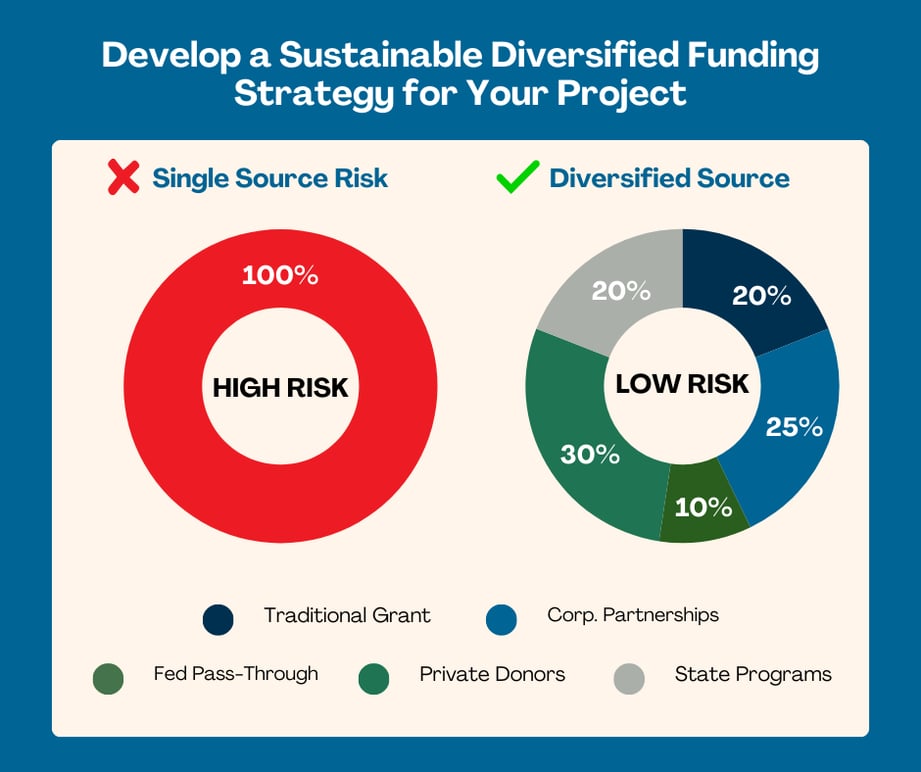
1. How Can We Diversify Beyond Traditional Funding Sources?
Why This Matters: With declining sales tax revenues, property tax freezes, the need for seed money, and increased competition for traditional grants, relying on a single funding stream is no longer sustainable.
Key Considerations:
- Explore creative partnerships with local businesses, even when they're focused on other community priorities, like new colleges or schools
- Investigate public-private partnership opportunities with differentiated roles for each stakeholder
- Look into federal pass-through funding and state programs like TPWD opportunities
- Evaluate whether your organization's structure (religious affiliation, nonprofit status) might limit or enhance access to certain funding opportunities
Action Step: Create a funding portfolio that includes at least 3-4 different revenue streams. Consider regional planning groups, community foundations, corporate giving programs, and government entities. For example, pair a state recreation grant with local business sponsorships and a community foundation award to reduce dependency on any single source.
2. Are We Positioning Our Projects as Essential Community Infrastructure?
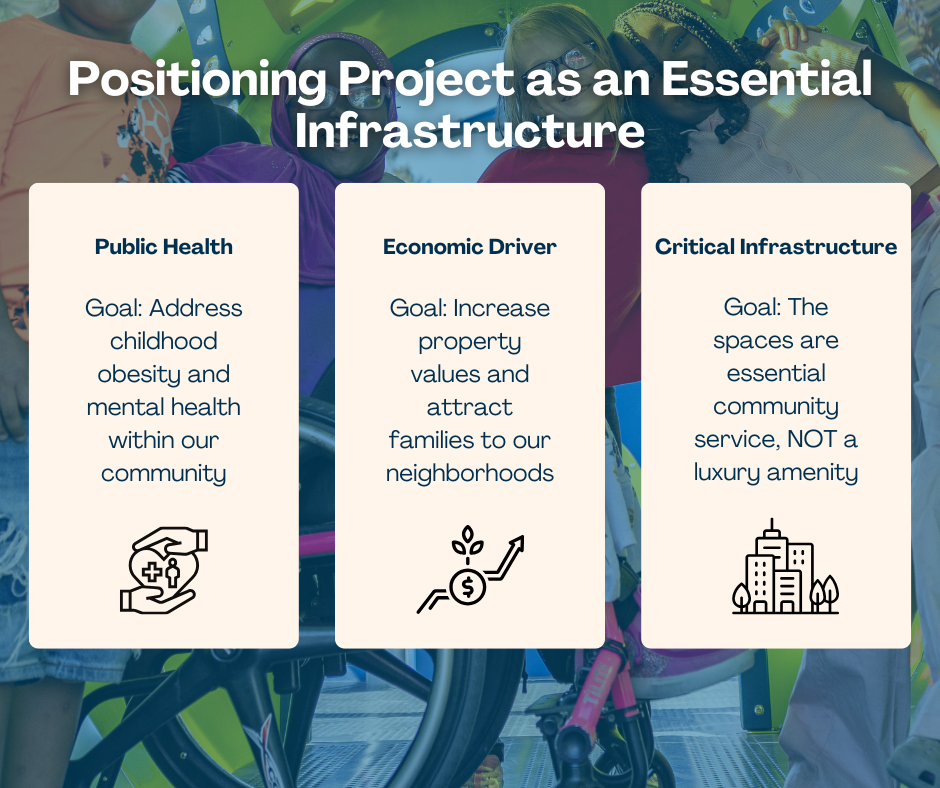
Why This Matters: In times of economic uncertainty, donors and funders prioritise "essential" needs over perceived "nice-to-haves."
Key Considerations:
- Frame playground and outdoor recreation projects in terms of public health, child development, and community economic impact
- Connect your project to broader community priorities (population growth management, tourism development, property values)
- Demonstrate how outdoor recreation spaces address essential services rather than just recreational amenities
- Quantify the community need, especially in growing areas where existing infrastructure is insufficient
Action Step: Develop a compelling narrative that positions your project as critical infrastructure supporting community health, safety, and economic development. Include these elements: specific health outcomes (obesity reduction, mental health support), educational benefits (outdoor learning, STEM integration), and economic data (property value increases, tourism revenue, reduced healthcare costs).
3. What's Our Grant Application Strategy for Maximum Efficiency?
Why This Matters: Small organizations and municipalities often lack dedicated grant writing staff, making efficiency crucial.
Key Considerations:
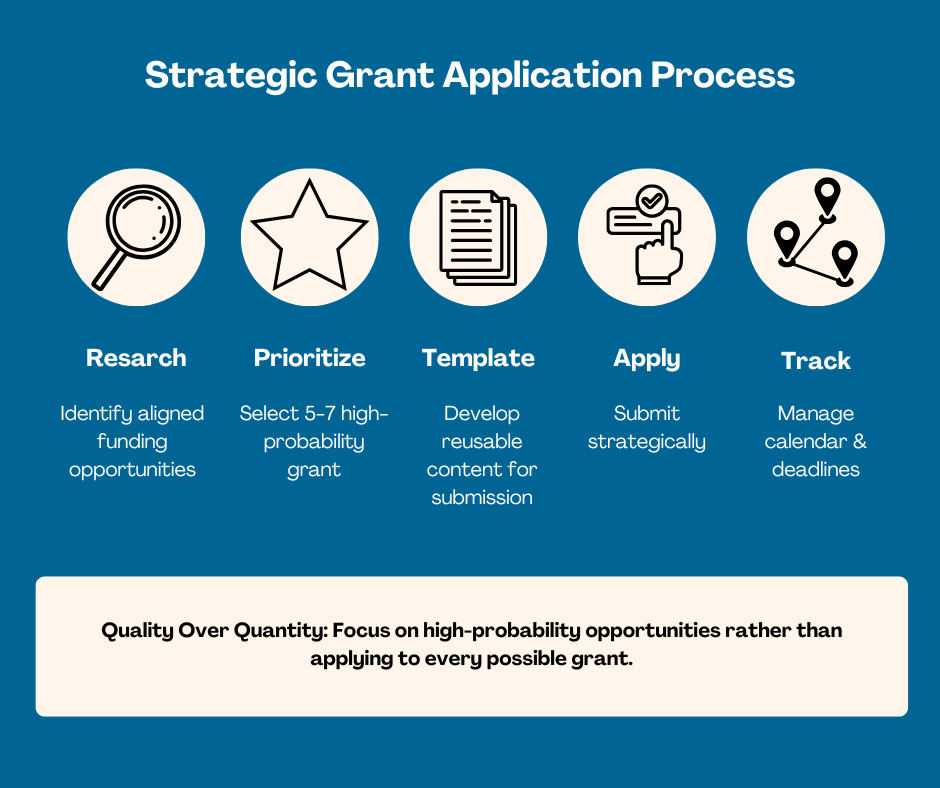
- Focus on grants that align closely with your project scope and organizational profile
- Develop template language and standardised project descriptions that can be adapted for multiple applications
- Research application requirements thoroughly before investing time in lengthy proposals
- Consider partnering with experienced grant writers or sharing resources with other organizations
- Create a grant calendar to manage deadlines and avoid last-minute rushes
Action Step: Identify 5-7 high-probability grant opportunities and create a systematic application schedule. Before beginning, answer these questions: How much funding do we actually need? (Consider whether you need quotes or additional planning before applying.) Do we have internal capacity to complete submissions, or should we hire a grant writer? Which grants align with our goals, and when are they due? Start with resources like the Landscape Structures grants list, your state parks department, and local community foundations.
4. How Do We Navigate Unique Organizational Challenges That Limit Funding Access?
Why This Matters: Many organizations face structural barriers that automatically disqualify them from certain funding sources.
Key Considerations:
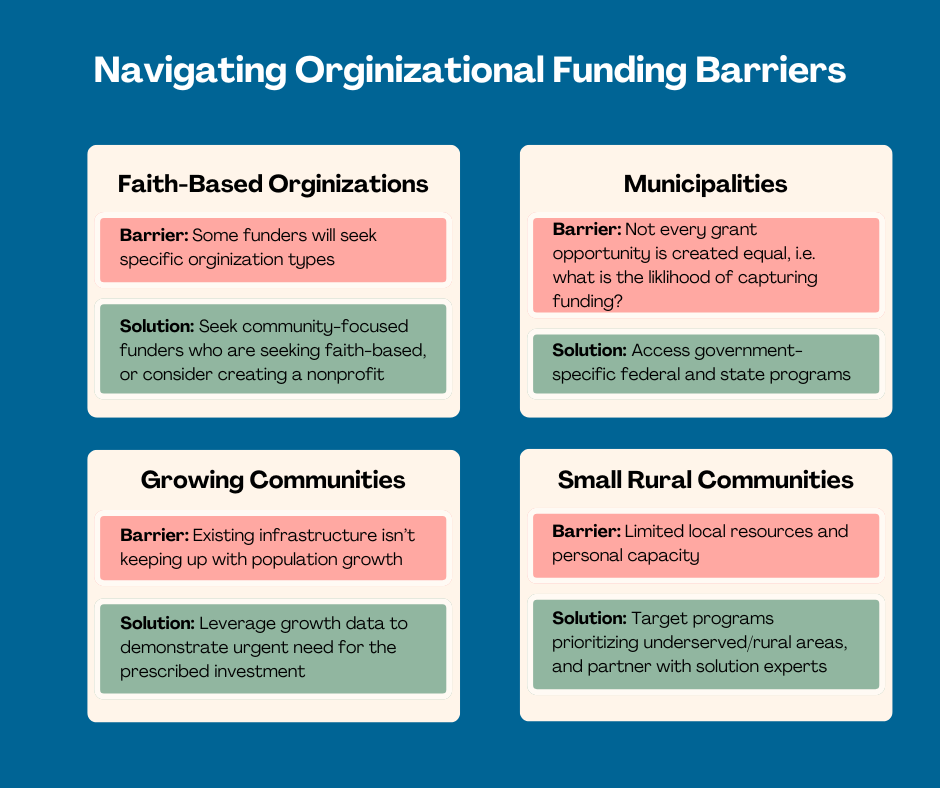
- For faith-based locations: Research funders that specifically support community projects regardless of location, or consider creating separate nonprofit entities
- For municipalities: Understand which federal and state programs are available to government entities vs. nonprofits
- For growing communities: Leverage population growth data to demonstrate increased need and urgency
- For small rural communities: Seek funding sources that prioritise underserved or rural areas
Action Step: Clearly identify your organization's unique barriers and develop targeted strategies to either overcome them or find alternative pathways. For example, if your church playground serves the broader community, document usage data from neighborhood families to strengthen applications to community-focused funders.
5. Are We Building Long-Term Sustainability Into Our Funding Plan?
Why This Matters: Large projects (multi-million dollar inclusive playgrounds, comprehensive park master plans) require sustained funding over multiple years and ongoing maintenance resources.
Key Considerations:
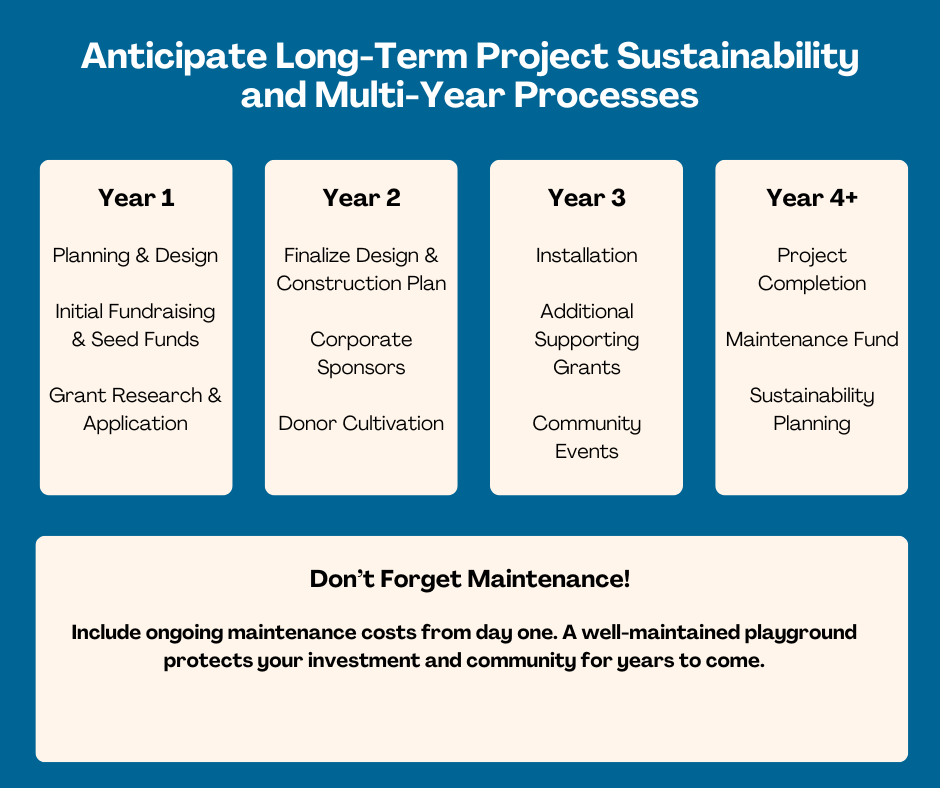
- Phase projects strategically to secure funding in manageable increments
- Include maintenance and operational costs in funding calculations from the beginning
- Build relationships with major donors and corporate sponsors for multi-year commitments
- Consider how current economic conditions and community priorities (new colleges, schools, state parks) might affect long-term funding availability
- Develop contingency plans for when primary funding sources fall through
Action Step: Create a 3-5 year funding timeline that accounts for both capital development and ongoing operational needs. Break your project into phases (Phase 1: playground equipment and safety surfacing; Phase 2: shade structures and site furnishings; Phase 3: landscaping and pathways) with separate funding targets for each. Include annual maintenance costs (typically 5-10% of capital investment) in your budget from day one.
Moving Forward: Your 2026 Action Plan
As you develop your funding strategy for 2026, remember that successful organizations are those that adapt to changing conditions while staying focused on their mission. The challenges you're facing...from budget constraints to increased competition...are opportunities to innovate and build stronger, more resilient funding models.
Next Steps:
- Use these five questions to audit your current funding approach
- Identify which areas need the most attention in your organization
- Develop specific, actionable plans for each identified gap
- Build partnerships with other organizations facing similar challenges
- Stay informed about changing funding landscapes and new opportunities
Download the FREE Community Funding Opportunity Worksheet to map out your 2026 strategy, identify funding gaps you can address today, and create a month-by-month action plan that keeps your project moving forward.
The outdoor recreation and playground funding landscape in 2026 will reward organizations that are strategic, adaptable, and focused on demonstrating genuine community impact. By asking these critical questions now, you're positioning your organization for funding success in the year ahead.