
Introduction
Choosing the right splash pad starts with five questions: who will use it, which water system your team can operate, how it will include children of every ability, what kind of play you want to create, and what it will cost to build and run. Answer those first, then choose the features.
-
Community size and age range
-
Water system and maintenance
-
Accessibility and inclusive play
-
Play features and theming
- Budget and long-term costs
In Texas, a splash pad can quickly become one of a community's most popular warm-weather amenities. It gives families a place to cool off, encourages active outdoor play, and can provide an accessible water play experience without the space, staffing or operational demands of a traditional swimming pool.
Splash pads can also serve a wide range of ages and abilities. With thoughtful planning, accessible layouts and a variety of water play experiences, they can create opportunities for children to participate in ways that are comfortable, exciting and appropriate for them.
But choosing the right splash pad involves much more than selecting a few spray features from a catalog. Community size, water management, accessibility, play value, maintenance, site conditions, and budget can all influence what type of splash pad makes the most sense.
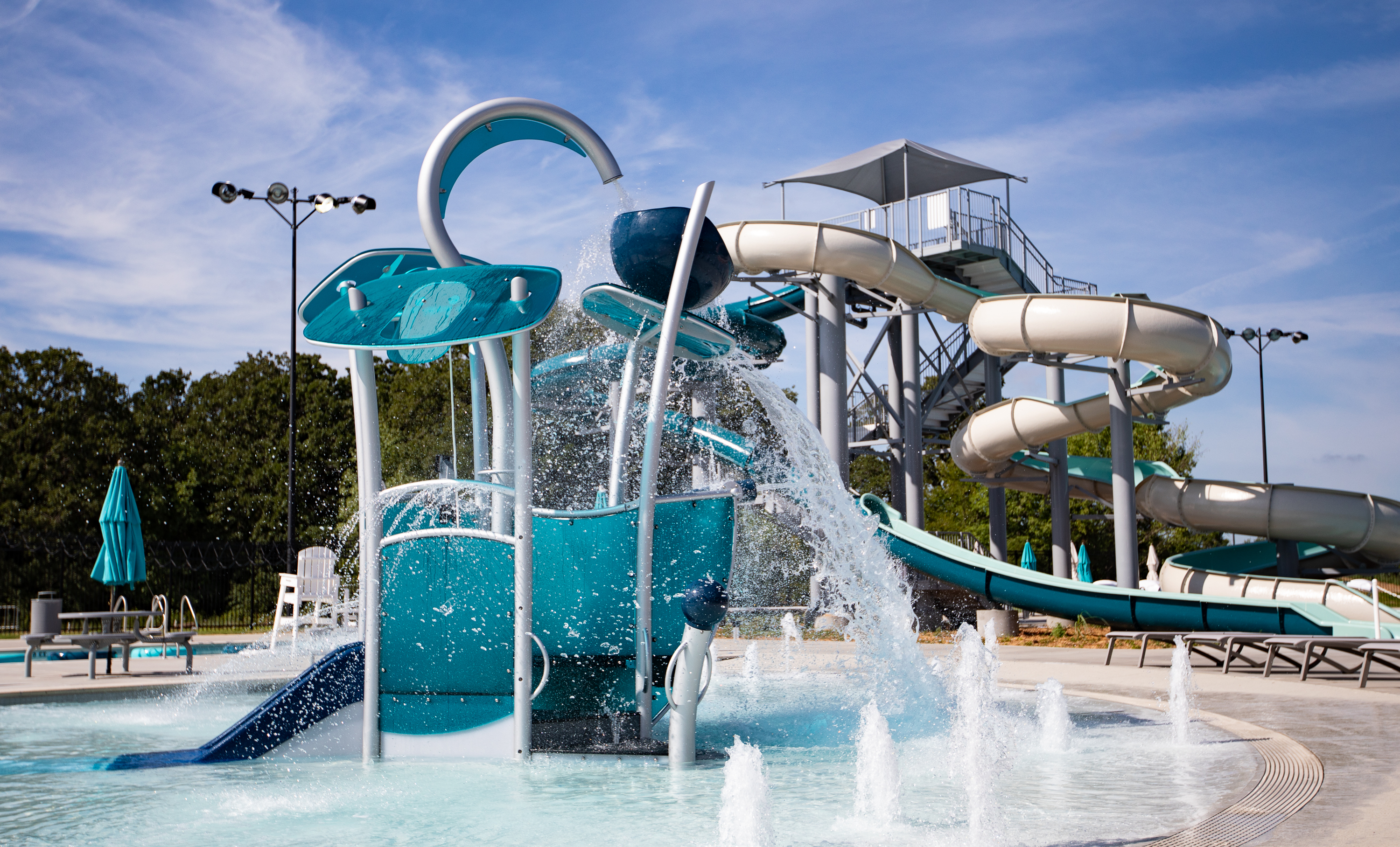
Texas communities are creating everything from compact neighborhood spray parks to destination-scale aquatic play environments. The key is understanding what you want the space to accomplish and then choosing the system, features, and supporting amenities that help you get there.
Here are five important factors to consider, along with examples of how Texas communities have approached splash pad design.
5 Factors to Consider when Choosing a Splash Pad
1. Community Size and Age Range
The people you expect to serve, and how often they'll come, should set the size of the splash pad, the variety of play experiences, and the amenities needed to accommodate visitors. A neighborhood splash pad primarily serving nearby families may require a very different design than a regional park expected to attract visitors from across the community. Smaller neighborhood splash pads often benefit from open layouts, gentle ground sprays, and a manageable number of interactive features. Larger destination splash pads may incorporate multiple play zones, more elaborate structures, and a wider range of water experiences to keep visitors engaged.
Consider the ages and abilities of potential users, anticipated daily attendance, peak summer demand, and proximity to existing parks, playgrounds, schools, or recreation facilities. A splash pad designed primarily for toddlers and preschoolers will have different needs than one expected to entertain children of all ages. Gentle ground sprays and smaller features can give toddlers and younger children a comfortable introduction to water play, while interactive elements, larger sprays and higher-energy features can keep older children engaged.
Designing with multiple ages in mind can help create a space siblings and families can enjoy together rather than a splash pad that appeals to only one age group.
The goal isn't necessarily to create the largest splash pad possible. It's to create an environment that fits the community and provides enough variety to encourage repeat visits.
In Practice: Legacy Ranch Splash Pad — Melissa, Texas
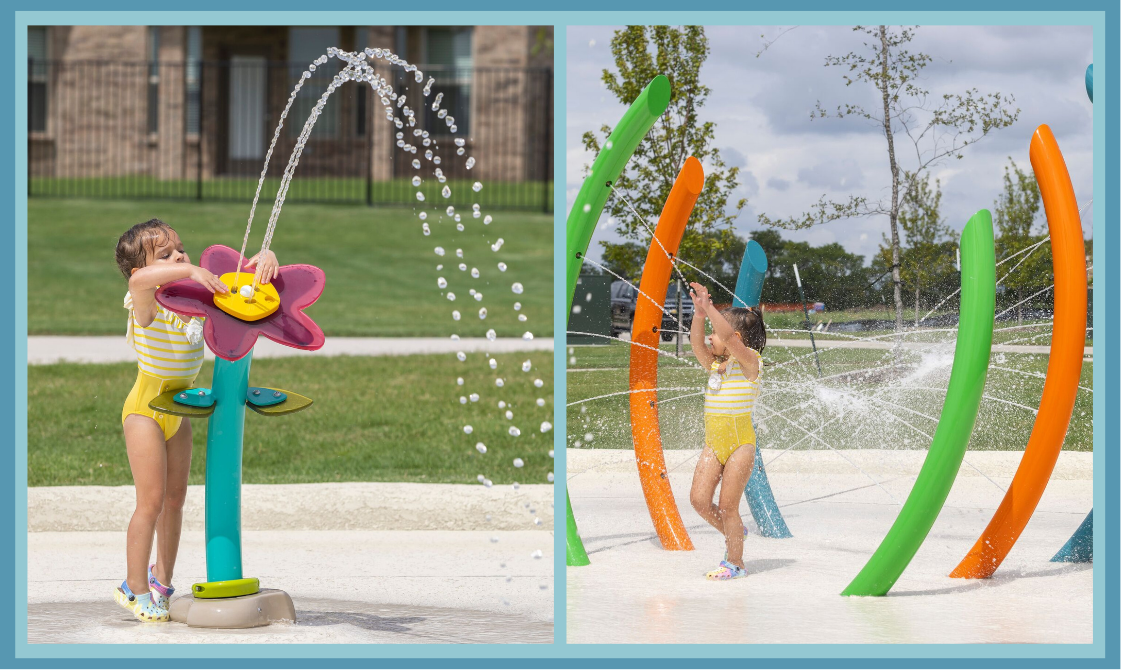
At Legacy Ranch in Melissa, a combination of interactive features creates opportunities for different kinds of water play. FloraSwirl, WhirlFlex, jumping streams, and a water bucket introduce variety in movement, water intensity, and play experiences.
Rather than relying on a single attraction, the design provides several ways for children to interact with water, explore, and enjoy the space.
Planning takeaway: Match the scale and variety of your splash pad to the families you expect to serve and consider how different features can work together to create a well-rounded experience.
Explore Legacy Ranch Splash Pad
2. Choose the Right Water System and Understand the Maintenance Requirements
One of the most important splash pad decisions happens behind the scenes. The water management system affects how the splash pad operates, how much maintenance it requires, and its long-term operating costs.
Two common approaches are recirculating and domestic, or pass-through, water systems.
Recirculating Water Systems
Recirculating systems collect, filter, treat, and reuse water. They are often appropriate for larger splash pads or designs requiring higher water volumes.
Because water is reused, these systems can reduce the demand for fresh water. However, they require mechanical equipment, filtration, water treatment, routine testing, and trained personnel to maintain safe operating conditions.
Domestic or Pass-Through Water Systems
Domestic systems use potable water that passes through the splash pad once before being directed to an approved drainage or disposal system.
These systems can simplify certain aspects of operation because they do not require the same recirculation and treatment equipment. However, they can consume substantial amounts of potable water, depending on the number of features, flow rates, and operating hours.
The best choice depends on available infrastructure, water costs, staffing, maintenance capabilities, local requirements, and the desired play experience. Communities considering pass-through should evaluate potable water consumption, drainage requirements, and local regulations before choosing this approach.
A Simpler Approach: Aquatix HydroLogix®
For communities seeking to minimize mechanical complexity and maintenance demands, Aquatix offers HydroLogix®, a non-electrical domestic water-delivery system.
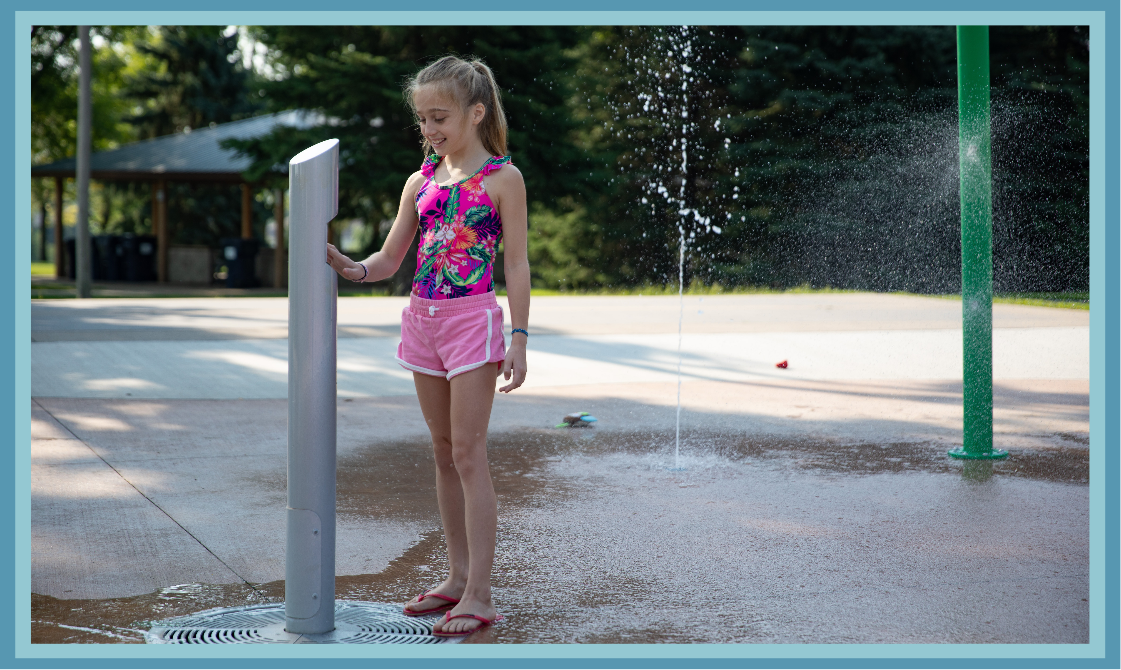
HydroLogix® uses an activation bollard and water-distribution manifold to operate splash pad features without the electrical controls and extensive mechanical equipment associated with some conventional systems.
By reducing mechanical complexity, HydroLogix® can simplify routine operation and potentially reduce the labor associated with maintaining a more elaborate splash pad system. It can be particularly attractive for parks departments with limited maintenance resources.
In Practice: Fritz Park in Hutto, Texas
Fritz Park in Hutto demonstrates how a recirculating system can support a substantial interactive splash pad.
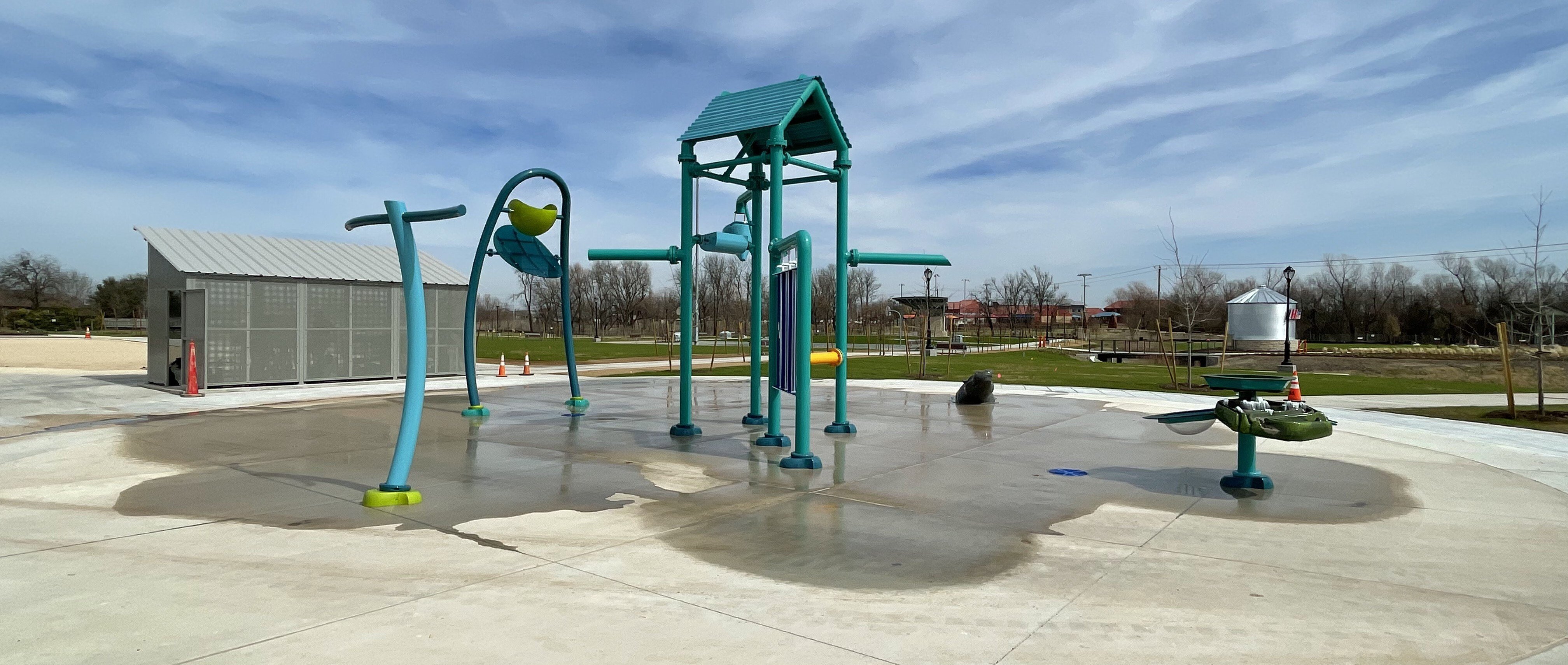
The park features a 100-gallon-per-minute recirculation system serving a diverse collection of aquatic play elements, including AquaGather™, Swimming Hippo, UniFlow, VersoSplash®, Curvy Jewel, Jr. Water Jewel, Mini Pillar, stream jets, mist features, and a Multi-Play Canopy.
This combination provides multiple water experiences while demonstrating the infrastructure required to support a feature-rich splash pad.
Another Texas Example: Evans Park in Mesquite, Texas
Evans Park in Mesquite offers a different approach, incorporating two HydroLogix® systems into its splash pad design. This illustrates how a simpler, non-electrical water-delivery approach can be used to support a larger collection of aquatic play features.
Planning takeaway: Select the water system based on both the play experience you want to create and your department's ability to operate and maintain it over time. A successful splash pad must work just as well behind the scenes as it does for visitors.
3. Make Accessibility and Inclusive Play a Priority
Splash pads naturally offer opportunities for inclusive recreation because they eliminate many of the physical barriers associated with traditional aquatic facilities. However, creating a truly inclusive splash pad requires more than providing a zero-depth play surface.
Children experience water differently. Some love the excitement of overhead sprays and dumping buckets, while others prefer gentler streams, smaller features, or opportunities to approach the water gradually.
Thoughtful splash pad design provides choices.
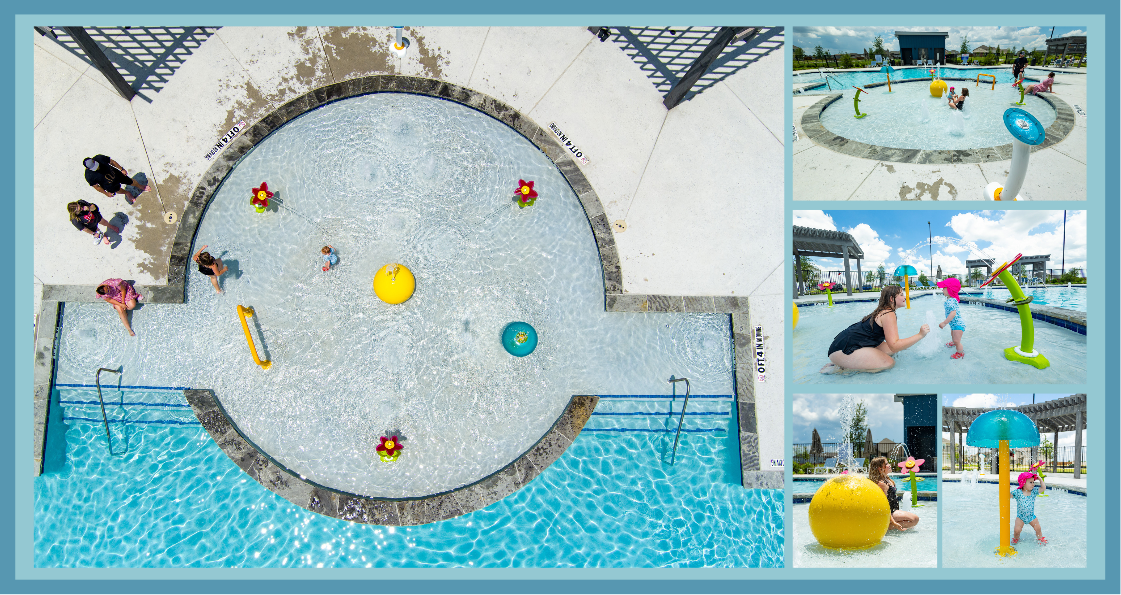
Consider incorporating features with different heights, water intensities, and levels of interaction. Ground sprays can offer accessible water experiences, while interactive features encourage exploration, problem-solving, and social play.
Sensory considerations are equally important. Some children may enjoy the sound, movement, and excitement of a highly active water environment, while others may need quieter spaces or gentler experiences.
Accessibility should also extend beyond the water features themselves. Accessible pathways, nearby seating, shaded gathering areas, transitions between wet and dry areas, and convenient access to restrooms all contribute to a welcoming experience for children and caregivers. The objective is to create opportunities for children of different ages and abilities to participate together rather than separating accessible play into a designated area.
Accessibility shouldn't be something added after the splash pad has already been designed. It should influence the layout and feature selection from the beginning. A thoughtfully designed splash pad can provide multiple ways to engage, helping children of different ages, abilities and comfort levels play alongside one another. For a deeper look, read our post Are Splash Pads Truly Accessible to Everyone?
In Practice: Coyote Meadows Splash Pad in Anna, Texas
Coyote Meadows in Anna incorporates features such as an Acrylic Tot Shower Dome, FloraSwirl, Tot Arch Bar, and Water Globe.
These elements offer different ways to experience water, including approachable, lower-height interactions suited to younger children and visitors who prefer gentler aquatic play.
The project demonstrates how a thoughtful combination of features can offer variety without relying exclusively on high-intensity water effects.
Planning takeaway: Inclusive splash pad design is about providing choices and meaningful opportunities to participate. Consider the entire visitor experience, from accessible pathways and play features to shade, seating, and caregiver comfort.
Explore Coyote Meadows Splash Pad
4. Select Features That Create the Right Play Experience
Once you've considered your community, water system, and accessibility goals, it's time to explore the features that will give the splash pad its personality.
Aquatix offers a wide range of aquatic play equipment, from subtle ground-level effects to large interactive structures. The right combination depends on the experience you want to create.
Ground-Level Water Features
Ground sprays, bubblers, stream jets, and jumping jets create opportunities for children to run, chase, discover, and interact with water. These features work particularly well in open splash pad designs where visibility, accessibility, and flexibility are priorities.
Geyer Commons in Mansfield demonstrates how effective this approach can be. Instead of relying on large above-ground structures, the splash pad features programmable LED jumping jets that create changing water patterns and visual effects.
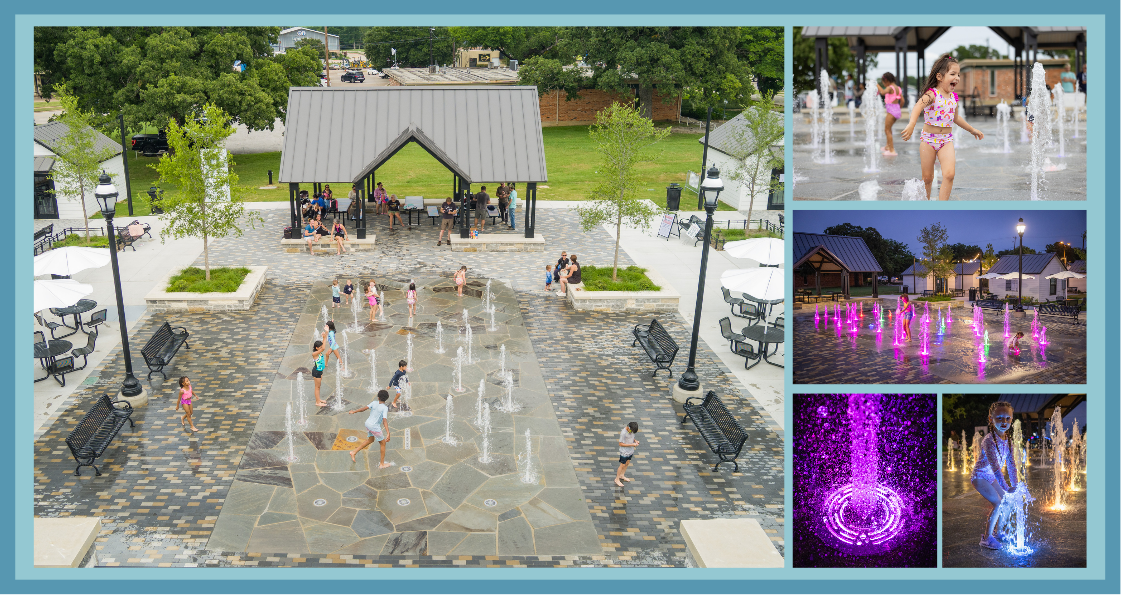
The result is an engaging experience that emphasizes movement and interaction while maintaining an open, uncluttered layout. Read the full story in Project Spotlight: Geyer Commons Splash Pad & Pavilion.
Explore Geyer Commons Splash Pad
Freestanding and Interactive Features
Arches, water cannons, themed spray elements, interactive stations, and dumping buckets add height, variety, and opportunities for imaginative play. These features can encourage children to move throughout the splash pad, experiment with cause and effect, and engage with other children.
Combining gentle and more dynamic features also helps create different play experiences within the same space.
Continuous-Play Structures
For communities seeking a larger destination-style attraction, continuous-play structures combine aquatic play with climbing, crawling, sliding, and exploration.
Aquatix's HydraHub1 and HydraHub2 are examples of this approach. These interconnected structures bring multiple water-play activities together within a continuous environment, encouraging children to move from one experience to another.
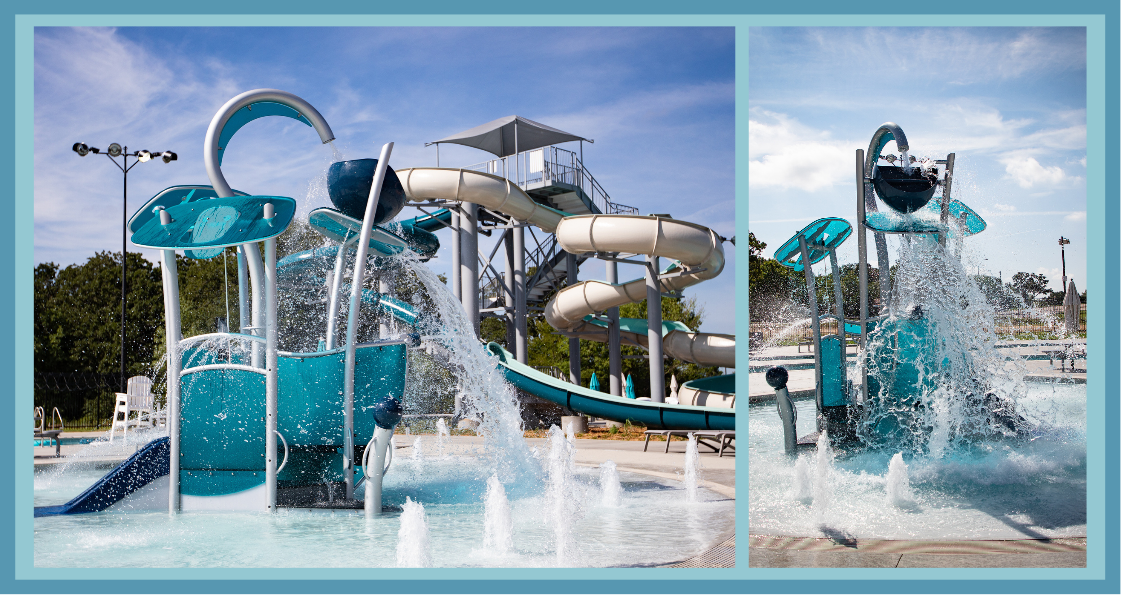
HydraHub2 includes interconnected platforms, slides, crawl tunnels, interactive water features, and other elements that combine physical activity with sensory exploration and social interaction.
Continuous-play structures can be especially appealing when the goal is to create a signature aquatic attraction that offers more extensive play opportunities.
Theming and Visual Appeal
A splash pad's theme can also help establish a unique identity. The theme doesn't have to be elaborate. Even subtle choices in colors, materials and feature styles can make a splash pad feel like an intentional part of the surrounding park rather than an attraction simply placed within it.
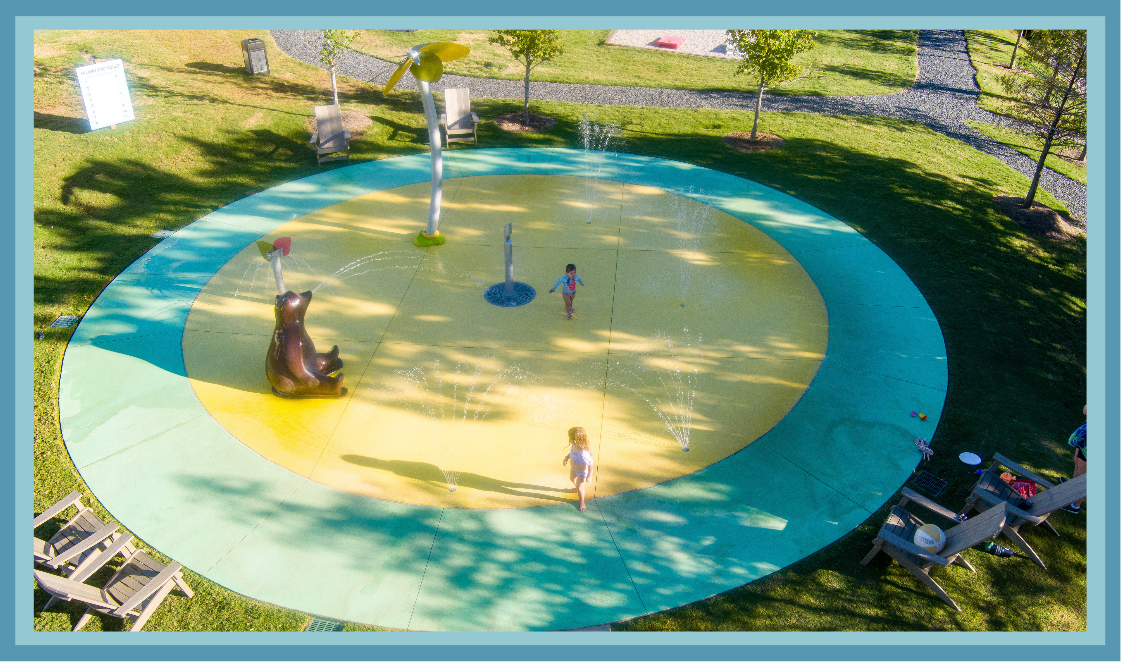
Nature-inspired features, colorful aquatic creatures, geometric forms, and coordinated design elements can complement the surrounding park or reinforce a community's character.
However, theming should enhance the play experience rather than determine it. The most successful designs balance visual appeal with functionality, accessibility, and opportunities for interaction.
In Practice: Woodway Arboretum in Woodway, Texas
At Woodway Arboretum, a collection of nature-inspired features, including BloomBurst, SplashPack Bear, Tot WellSpring Acrylic, Crown Jets, and Jr. Water Jewels — creating a cohesive aquatic play environment.
The combination of playful forms and different water effects provides visual character while offering multiple ways for children to engage with the space.
Planning takeaway: Begin by deciding how you want children to play and what kind of atmosphere you want to create. Then select features and themes that support those goals.
Explore Woodway Arboretum Splash Pad
5. Budget and Long-Term Costs
Splash pad budgets involve more than the cost of aquatic play equipment. Site preparation, utility connections, water management systems, concrete, drainage, surfacing, engineering, installation, and supporting amenities can all influence the overall investment.
Communities should also consider long-term operating costs, including water consumption, electricity, water treatment, seasonal startup and shutdown, routine inspections, replacement components, and staff time. Our post Splish, Splash, Safety covers the inspection and operating side in more detail.
A larger or more elaborate splash pad isn't automatically the best investment. A smaller, thoughtfully designed environment may provide excellent play value while remaining more manageable for the community responsible for maintaining it.
When establishing a budget, prioritize the elements that will have the greatest impact on the visitor experience.
For some communities, that may mean investing in a wider variety of water features. For others, shade, accessible pathways, seating, and convenient restrooms may contribute just as much to the success of the project.
Planning for future expansion may also be worth considering. A phased approach can allow a community to establish a strong initial splash pad while leaving room for additional amenities as funding becomes available. If you're working with an aging pool, see Transforming Community Pools into Splash Pads: A Smart Investment.
In Practice: Hico Splash Pad in Hico, Texas
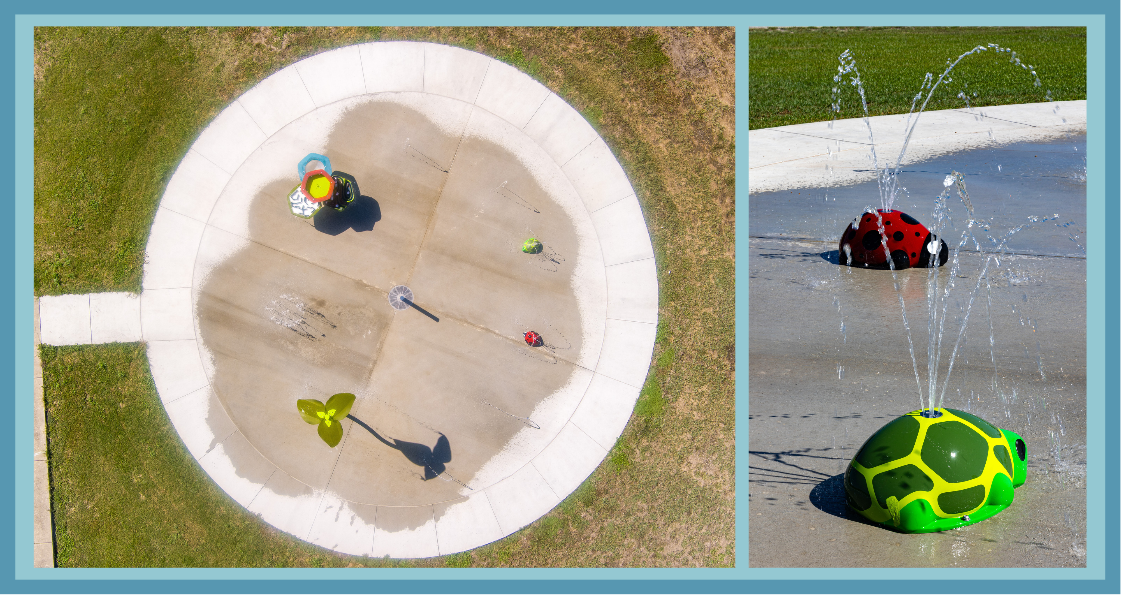
The Hico splash pad combines AquaGather, LeafCrown, TotPack Ladybug and Turtle, Center Pillar Ring, Stream Jets, and a Triple Arch Jet to create a varied aquatic play experience.
Rather than relying on one massive structure, the design uses a coordinated collection of features to provide different water interactions and visual interest.
It's an example of how thoughtful feature selection can create a memorable splash pad without requiring a large continuous-play structure.
Planning takeaway: Focus on the experience and long-term value rather than simply maximizing the number or size of features. The right investment is one your community can enjoy, operate, and maintain for years to come.
Plan the Amenities Around the Splash Pad
While aquatic play features may be the main attraction, the surrounding amenities often determine how comfortable the experience is for families and how long visitors choose to stay.
In Texas, shade is especially important. Shade structures, covered seating, and nearby shelters provide places for families to escape direct sunlight while remaining close to the action.
Seating should offer convenient views of the splash pad so parents and caregivers can supervise comfortably. Accessible pathways should connect the play area to parking, restrooms, and other park amenities.
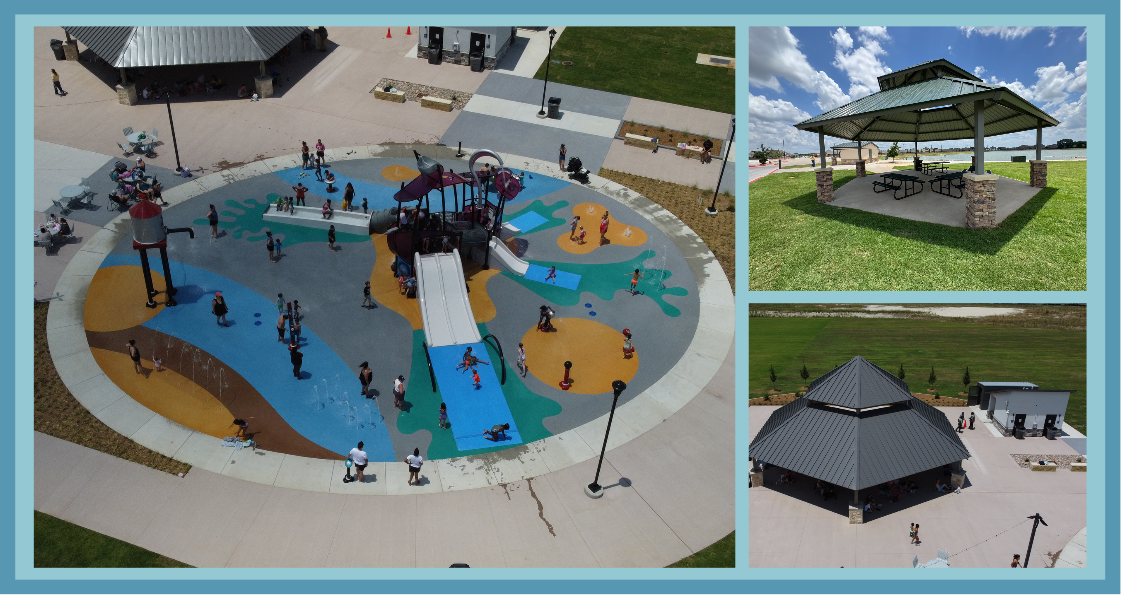
Additional considerations include drinking fountains, changing areas, picnic tables, landscaping, drainage, and connections to adjacent playgrounds or trails.
When these elements are planned together, a splash pad becomes more than a place to cool off. It becomes a community gathering space where families can spend an entire afternoon.
Frequently Asked Questions
What is the difference between a recirculating and pass-through splash pad?
A recirculating splash pad collects, treats, and reuses water, while a pass-through system uses potable water once before directing it to an approved drainage or disposal system. Recirculating systems require water-treatment equipment and ongoing monitoring, while pass-through systems can simplify some mechanical requirements but may use more fresh water.
How much maintenance does a splash pad require?
Maintenance depends on the water system, number and complexity of features, and operating conditions. Recirculating systems typically require regular water-quality testing, treatment, filtration, and equipment inspections. Simpler domestic systems, including Aquatix HydroLogix®, can reduce mechanical complexity, but still require routine inspections, cleaning, seasonal maintenance, and appropriate water management.
What makes a splash pad accessible and inclusive?
Inclusive splash pads provide accessible routes and opportunities for people of different ages and abilities to participate. A variety of ground-level features, interactive elements, water intensities, sensory experiences, and accessible supporting amenities can help create a more welcoming environment.
What splash pad features are best for different age groups?
Younger children often benefit from gentle sprays, low-height features, and approachable water experiences. Older children may enjoy more dynamic sprays, interactive elements, dumping features, and continuous-play structures. Providing different play zones and experiences helps accommodate a broader range of users.
When should a city begin planning a splash pad?
Planning should begin well before the desired opening season. Site conditions, utilities, engineering, permitting, procurement, equipment selection, and construction schedules can all influence the timeline. Early consultation with experienced splash pad professionals can help identify potential challenges before design decisions are finalized.
Conclusion: Choosing the Right Splash Pad Starts with the Right Questions
There isn't a single formula for the perfect splash pad. The right solution for your community depends on your visitors, available space, budget, maintenance resources and the experience you want families to have when they arrive. By considering those factors before selecting equipment, communities can create water play environments that are engaging, accessible and easier to operate over the long term.
At Whirlix Design, we help communities throughout Texas navigate those decisions, from early planning and water play design, to equipment selection, installation and construction. Whether you're considering a small neighborhood splash pad or a larger destination water play environment, our team can help you create a space designed around the needs of your community.