
Fitness trails can transform an ordinary walking path into an active community wellness amenity. By combining walking or running with strategically placed exercise opportunities, parks can give residents more ways to incorporate physical activity into their everyday routines.
But a successful fitness trail isn't simply a path with exercise equipment placed alongside it. The route, station locations, spacing, accessibility, rest areas and relationship to the rest of the park all influence how people experience—and ultimately use—the space.
The best place to begin isn't with equipment. It's with how you want people to move through the park.
Start With the Fitness Experience
Before deciding where individual stations should go, think about the experience the trail should provide. Will it primarily serve walkers who may occasionally stop for an exercise? Is it intended to function as a complete workout circuit? Will runners incorporate stations into their training? Could the space eventually support organized fitness programs or group workouts?
The answers can influence everything from the length of the route to the number and location of fitness stations. It is also important to think about the range of people who may use the trail. A community fitness trail might serve an experienced runner, an older adult working on balance and mobility, a teenager conditioning for a sport or someone who is just beginning an exercise routine.
The layout should allow those users to participate at their own pace rather than forcing everyone through the same workout.
Choose a Trail Configuration
There isn't one correct way to lay out a fitness trail. Most projects fall into one of three general configurations.
Loop Layout
A loop creates a continuous route with fitness stations positioned around it. Users can complete the entire circuit, continue for another lap or simply walk the trail without stopping at every station. Looping patterns are particularly effective for cardiovascular activity because they encourage continuous movement.
Linear Layout
A linear fitness trail distributes exercise opportunities along a path that connects different areas of a park. This can be especially effective when a community already has a walking trail or greenway. Fitness stations can expand what the existing trail offers without requiring the creation of an entirely separate recreation area.
Hybrid Layout
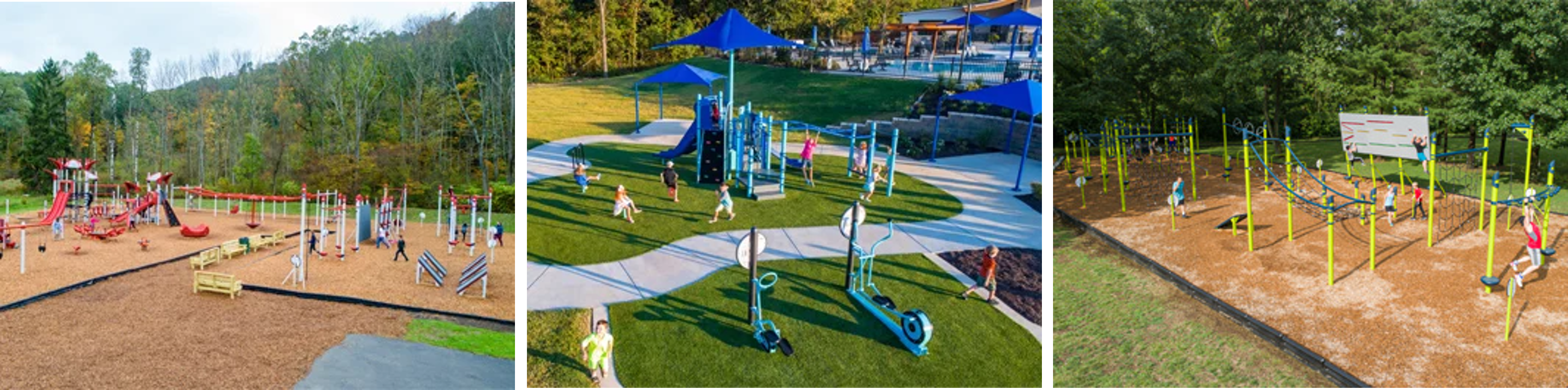
A hybrid approach combines a walking or running route with one or more concentrated fitness zones. Instead of stopping at an individual piece of equipment every few hundred feet, users might walk or run between clusters of exercise stations. This can create natural intervals between cardiovascular and strength activities while also allowing equipment to be grouped where site conditions are most favorable.
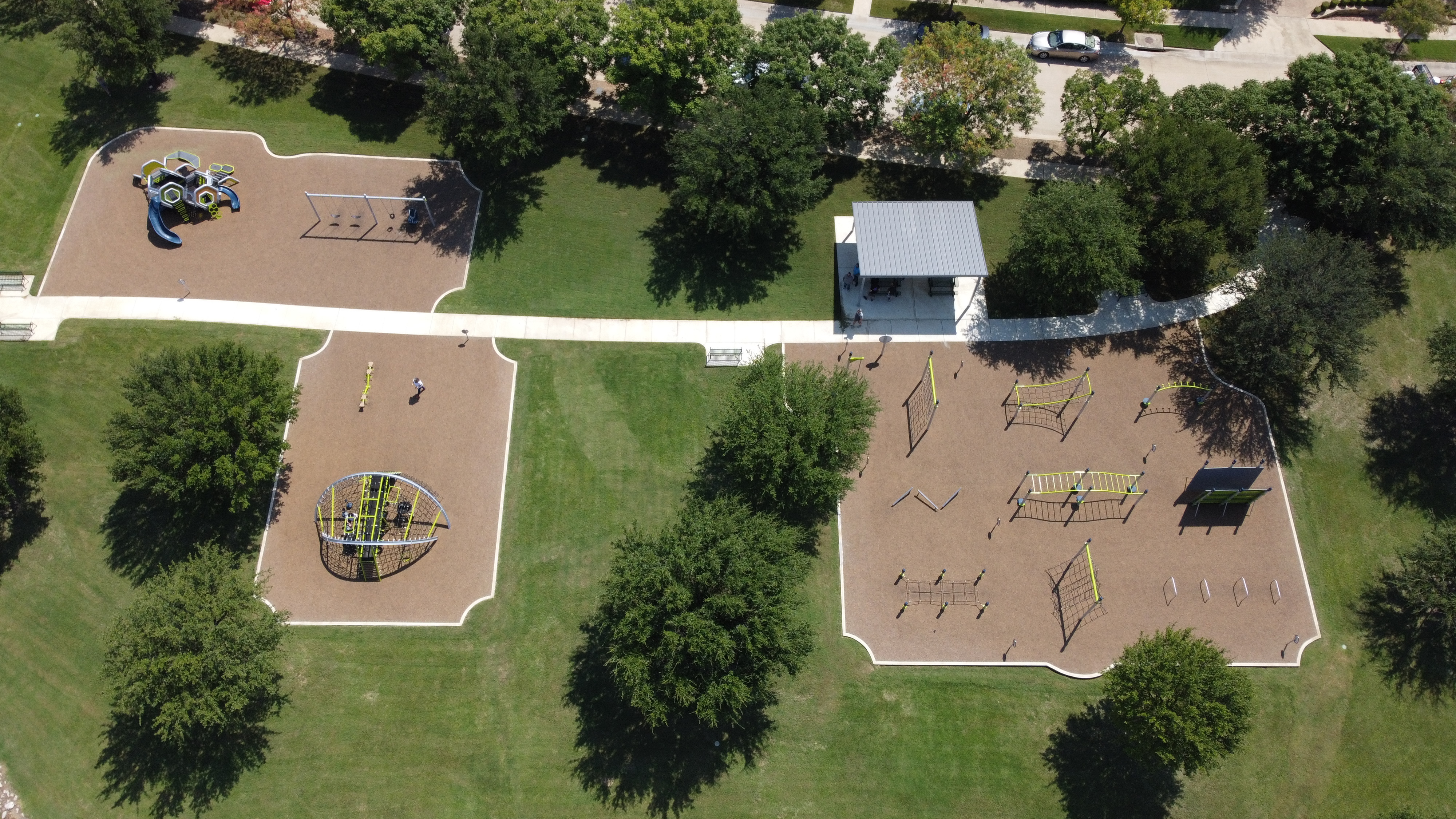
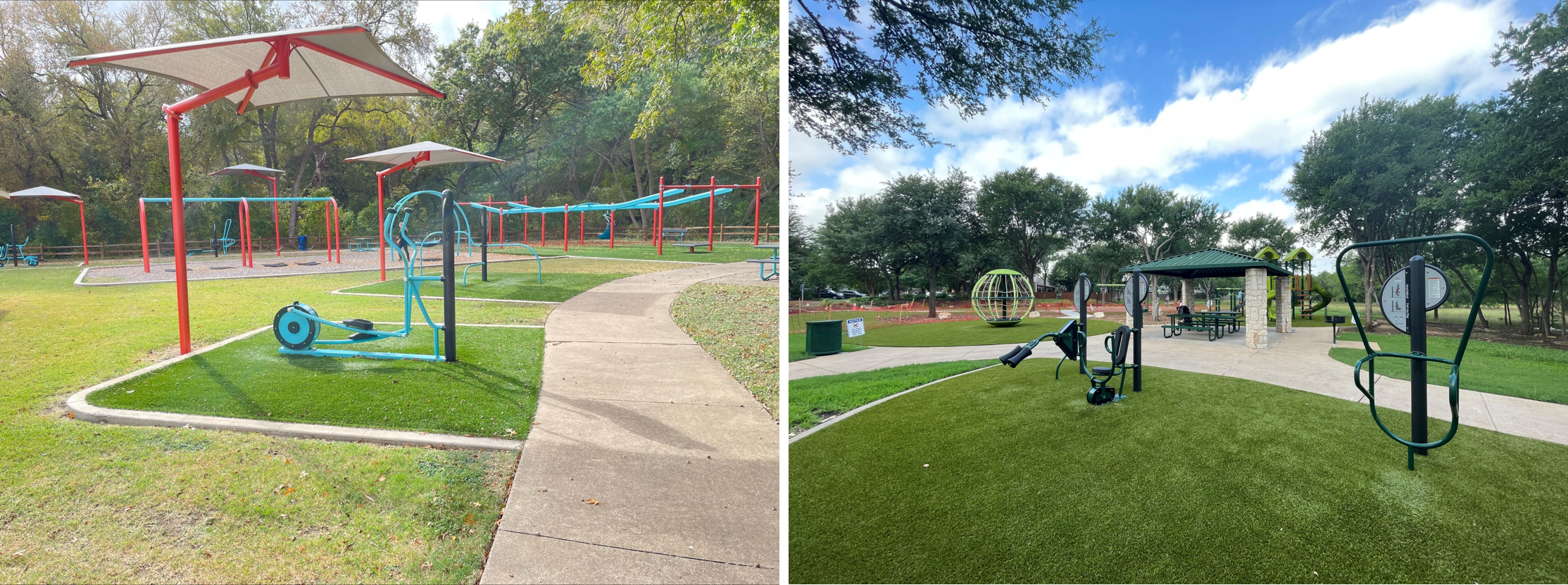
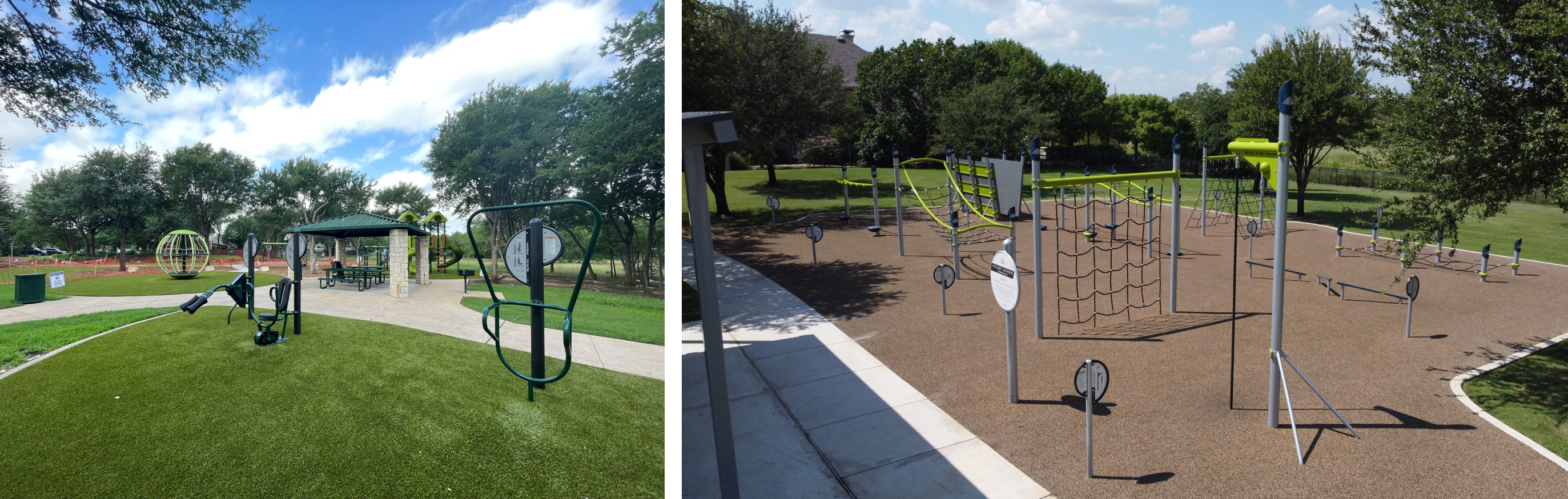
Projects such as Fitness Park in Castle Hills, Dot Thomas Park in Cedar Hill and Friendly Oaks Park in the Fern Bluff MUD area of Round Rock provide useful visual references for seeing how outdoor fitness can be incorporated into a larger park environment. Each site offers an opportunity to look beyond individual equipment pieces and consider circulation, proximity to other amenities and how the fitness area fits into the overall park plan.
Make Spacing Part of the Workout
Fitness stations don't necessarily need to be placed at perfectly equal intervals. Think about what happens between stations.
Walking or jogging between fitness areas is part of the exercise experience. A longer interval after a demanding strength station can provide active recovery. A lower-intensity activity might follow a more strenuous station. Several strength exercises might be grouped together before users continue to another section of the trail.
This approach makes the trail itself part of the workout rather than simply a way to get from one piece of equipment to another. It also gives users more freedom to determine their own intensity. Someone might walk between stations while another person runs the same route.
When reviewing completed projects such as Fitness Park, Dot Thomas Park and Friendly Oaks Park, pay attention not only to the equipment itself but to the space around it. Where do users approach the fitness area? How much room exists between activities? Where can someone pause or move past a station? These are the kinds of details that influence whether a fitness space feels intuitive once it is built.
How Many Stations Should a Fitness Trail Have?
There isn't a universal number. A smaller neighborhood park might incorporate only a handful of fitness stops into an existing walking loop. A larger community or regional park may have room for a much more extensive circuit. Rather than beginning with an arbitrary equipment count, start with what the trail should accomplish.
Does the overall experience provide enough variety to create a meaningful workout? Are there opportunities for different levels of challenge? Can people use only part of the circuit and still have a worthwhile experience?
A thoughtfully planned trail with fewer stations can be more successful than one filled with equipment simply because space was available.
Design for Different Ages and Abilities
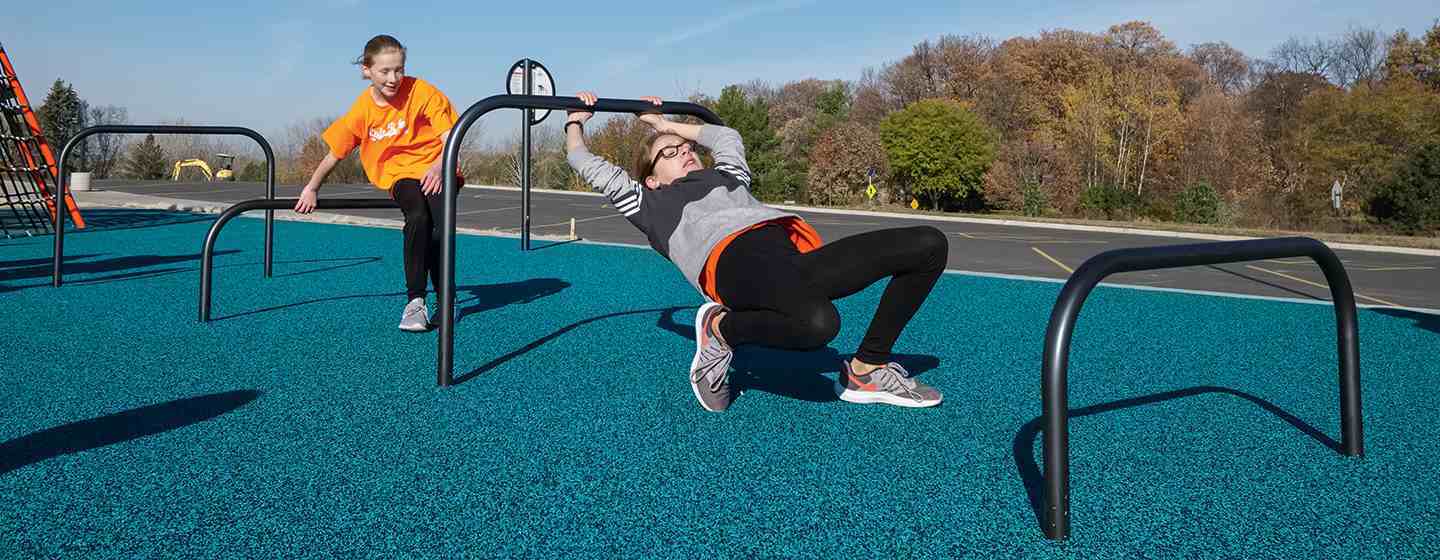
Fitness trails are public recreation spaces, so they should be planned for more than one type of athlete. Some users may want a demanding workout. Others may be interested primarily in walking, stretching, mobility or balance. Providing different levels of challenge can make the space more approachable for beginners while still giving experienced users opportunities to progress.
Accessibility should be considered from the beginning as well. Look at the entire journey through the fitness space—not just the individual pieces of equipment.
Can users comfortably reach each station? Are transitions from the trail to the exercise area logical? Is there enough room to maneuver around equipment? Can someone choose to bypass a station and continue along the route?
The goal is to create a fitness environment that offers choices.
Don't Forget Rest and Recovery
More exercise isn't always better. A well-designed fitness trail also gives people opportunities to recover. Benches and seating areas can make the trail more comfortable for older adults, beginning exercisers and people accompanying someone who is working out. They can also extend the usefulness of the trail beyond fitness by creating places to stop, socialize and enjoy the park. Drinking fountains or bottle-filling stations are particularly valuable along longer trails and near concentrated fitness areas.
Where these amenities are located matters. Rather than treating them as additions after the fitness layout is complete, incorporate rest and hydration into the route from the beginning.
Connect the Fitness Trail to the Rest of the Park
A fitness trail shouldn't necessarily function as an isolated amenity. Consider what surrounds it. A route near sports fields can provide opportunities for warm-ups and conditioning. Fitness near a playground can allow different generations to find age-appropriate ways to be active within the same general area. Connections to existing walking trails can expand the fitness experience without duplicating infrastructure.
This is another reason completed projects are valuable planning tools. Looking at Fitness Park, Dot Thomas Park and Friendly Oaks Park can help stakeholders visualize fitness as one component of a complete recreation environment rather than an isolated collection of equipment.
The strongest layouts consider how fitness fits into the entire park experience.
From Trail Layout to Equipment Selection
Once the route, users and overall workout experience have been established, the next step is selecting equipment that supports those goals.
Strength, cardiovascular fitness, balance and other types of movement all have a place in outdoor fitness—but not every trail needs the same combination.
Next in our Fitness Trail Planning Series: “Choosing Fitness Trail Equipment: What to Include, Plus Shade and Surfacing Considerations.”
Planning an outdoor fitness space? Whirlix Design can help evaluate your site.